See This ’32 Ford
Nearly a century after it first appeared, the 1932 Ford remains one of the most recognizable foundations in American hot-rod history — loved by builders, collectors, racers, and enthusiasts alike.
Explore the Deuce →Why the 1932 Ford Still Matters
The 1932 Ford replaced the Model A and was offered in numerous body styles. Its proportions, simplicity, and adaptability made it a natural starting point for generations of hot rodders.
Roadsters and coupes became especially desirable. Original bodies remain highly prized, while replica bodies have helped keep the unmistakable Deuce shape alive in modern street rods.
Why Was It Called a Deuce?
The nickname comes directly from the second digit of the model year — 1932. Over time, “Deuce” became shorthand among enthusiasts for one of Ford's most important early performance platforms.
Who Are You Calling “Flathead”?
The Model 18 carried Ford's new V8, commonly known as the flathead. It helped bring V8 power to a lighter and more affordable mass-produced car, rather than limiting that kind of engine to expensive luxury automobiles.
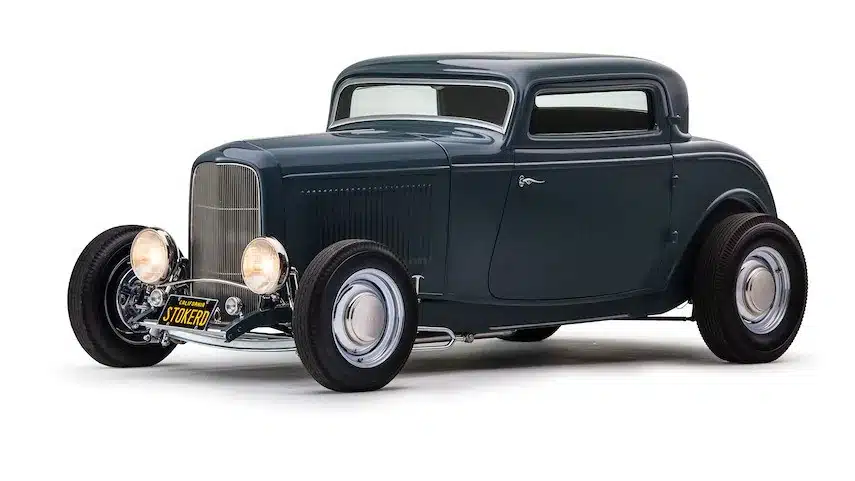
A Shape Hot Rodders Made Their Own
The ’32 Ford came in a variety of configurations, but the roadsters and three-window and five-window coupes became some of the most celebrated.
Builders discovered that the simple shape could take on countless personalities — traditional, stripped-down, race-inspired, custom, or wildly modified — while still looking unmistakably like a Deuce.
The ’32 Ford at a Glance
A few reasons this one model year became such a major part of American automotive culture.
Even the U.S. Postal Service Celebrated the Deuce
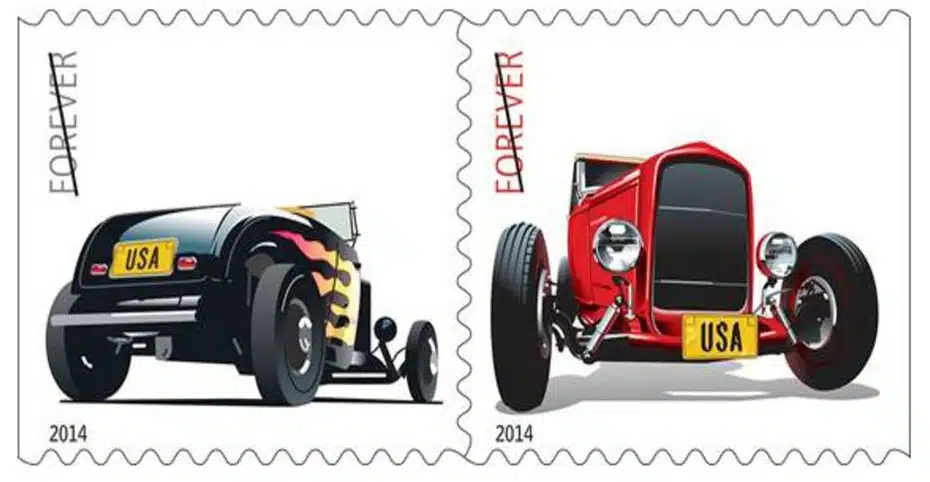
In 2014, the United States Postal Service honored American hot-rod culture with stamps featuring customized 1932 Ford roadsters.
One showed a black roadster with flames, while another featured a bright red Highboy — proof that the Deuce had become much more than an old Ford. It had become a piece of American culture.
The Highboy Became a Symbol of Hot-Rod Culture
The ’32 Highboy Roadster is one of the forms most closely associated with traditional hot rodding. The clean body, exposed wheels, lowered stance, and performance-oriented attitude became a visual shorthand for the American hot rod.
The 1932 Ford's connection to early hot-rod magazines, custom builders, racers, and later collectors helped secure its place among the most recognizable cars ever modified.
1932 Ford Highboy Roadster
Take a closer look at a 1932 Ford Highboy through Jay Leno's Garage.
If the video does not display, keep your existing Jay Leno video block beneath this section until we reconnect its exact YouTube embed address.
V8 Performance for Everyday Buyers
Before Ford introduced its flathead V8, eight-cylinder engines were largely associated with bigger, more expensive automobiles. The Model 18 helped change that.
Buyers responded strongly to the V8 version, and the combination of inexpensive cars, mechanical knowledge, and increasingly organized hot-rodding culture helped transform old Fords into racers, street rods, and personalized performance machines.

American Graffiti and the Deuce Coupe
The yellow five-window Deuce Coupe featured in the 1973 film American Graffiti became one of the most memorable movie hot rods.
Its appearance helped introduce another generation to the look, sound, and attitude of traditional American hot-rodding culture.
More Classic Car Stories From CarDudes
Continue Exploring CarDudes Nation
Classic cars, automotive history, practical car advice, useful tools, and conversations for people who simply enjoy cars.
Explore CarDudes Nation →