Don't Wait Until You're Stranded to Wish You Had One
A dead battery can leave you stuck at home, at work or miles from
anyone who can help. A portable battery jump starter gives you a way
to get your vehicle running again without needing another car.
Jumper cables have been around forever, and they're still useful.
But they have one major limitation: you need another vehicle
and another person willing to help.
That's why we're big fans of the modern portable battery jump starter.
Charge it, keep it in the vehicle, and when a weak battery leaves you
stranded, you may be able to get yourself moving again without waiting
for a stranger, friend or tow truck.
It's the kind of product you can carry for months without thinking
about it — right up until the day you really need it.
PortableEasy to Carry
IndependentNo Second Car
FastReady When Needed
PracticalRoadside Backup
Why Carry a Portable Jump Starter?
For us, the biggest advantage isn't horsepower, gadgets or flashy
features. It's independence when your battery lets you down.
🚗 No Second Vehicle Required
Traditional jumper cables require a donor vehicle. A charged portable
unit is designed to provide starting assistance on its own.
🌙 Useful When Nobody Is Around
A dead battery doesn't always happen in a convenient parking lot.
Having your own starting power can be especially useful at night or
in less-traveled locations.
🧰 Compact Emergency Gear
Modern units can fit in a trunk, cargo area or vehicle emergency kit
without taking up much room.
👨👩👧 Useful for More Than Your Car
A jump starter may help you assist a family member or another driver
with a compatible vehicle when their battery is weak.
How to Use a Portable Battery Jump Starter
Always follow the instructions supplied with your particular jump
starter and your vehicle owner's manual. Connection procedures and
safety features can vary by model.
1
Turn the Vehicle Off
Switch off the ignition and unnecessary electrical accessories before
connecting the jump starter.
2
Find the Correct Connection Points
Locate the positive and negative battery terminals or the designated
remote jump-starting points specified by your vehicle manufacturer.
3
Connect the Clamps as Directed
Follow the jump starter manufacturer's instructions for connecting
the positive and negative clamps. Never guess about polarity.
4
Activate the Jump Starter
Some units operate automatically while others require a power or
boost function. Follow the instructions for your particular model.
5
Start the Vehicle
Crank the engine according to the jump starter's recommended procedure.
Avoid repeated long cranking attempts that can overheat equipment.
6
Disconnect and Recharge
Once the vehicle is running, disconnect the unit according to its
instructions. Recharge the jump starter afterward so it's ready for
the next emergency.
⚠ Battery Safety Matters
Do not attempt to jump-start a battery that is visibly damaged,
leaking or frozen. Keep sparks and flames away from batteries, protect
your eyes, and follow both the vehicle and jump-starter manufacturer's
instructions.
Portable Jump Starter vs. Jumper Cables
Both can belong in your roadside-emergency toolbox, but they solve the
same problem in different ways.
Portable Battery Jump Starter
Doesn't normally require a second vehicle
Compact and easy to store
Can be used when you're alone
Must be kept adequately charged
Must be suitable for your vehicle and engine
Traditional Jumper Cables
Simple and inexpensive
No internal battery to recharge
Usually require another suitable vehicle
Require safe connection between two vehicles
Still an excellent backup to carry
CarDudes Tip
If you have room, carrying both a portable jump
starter and a good set of jumper cables gives you more than one option
when battery trouble strikes.
What to Look for When Buying a Jump Starter
Don't choose one simply because the box shows the biggest number.
Make sure the unit is appropriate for the vehicle you expect it to
start.
Engine Compatibility
Check the manufacturer's recommended gasoline and diesel engine sizes
for the unit.
Starting Capability
Compare the manufacturer's starting specifications with the needs of
your vehicle rather than relying on advertising alone.
Safety Protection
Look for documented safety features such as reverse-polarity or
improper-connection protection.
Clamp Quality
Good clamps and durable cables matter because they provide the
physical connection between the starter and vehicle.
Size & Storage
Choose a unit you can realistically keep in the vehicle along with
its cables and accessories.
Recharge Method
Know how the unit is recharged and periodically verify that it still
has enough charge to be useful.
CarDudes Pick
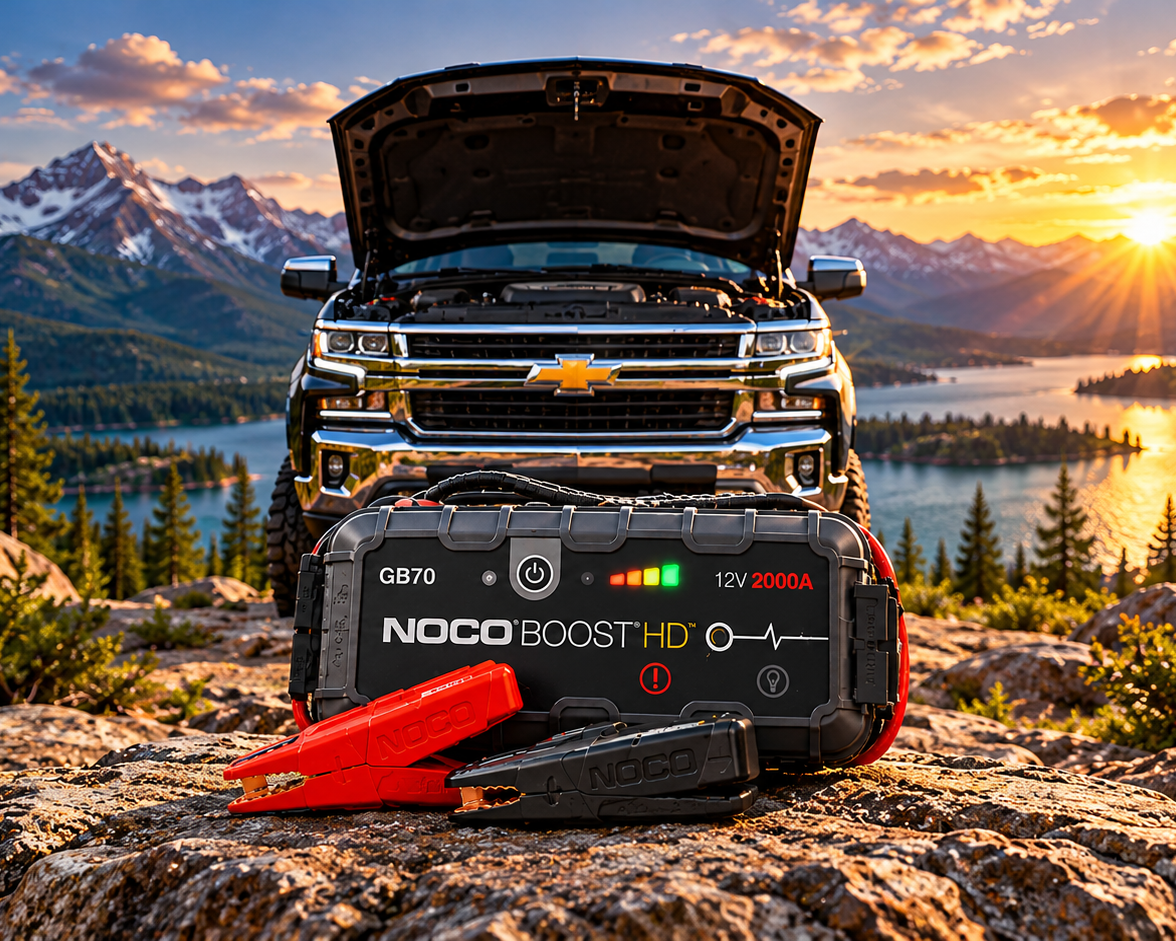
Why We Like NOCO Portable Jump Starters
NOCO's portable Boost line is one example of the compact lithium jump
starters that made us fans of this type of roadside tool in the first
place.
They're designed to provide portable starting assistance without
having to position a second vehicle next to yours. Depending on the
specific model, NOCO also offers built-in connection and polarity
protection features.
Choose the Right NOCO for Your Vehicle
NOCO offers different Boost models for different engine sizes and
starting requirements. Check the current specifications and choose a
unit rated for the vehicle you plan to use it with.
A portable battery jump starter isn't much help if you discover it
has a dead internal battery at the same time your car does.
Check It Periodically
Follow the manufacturer's recommendations for checking the charge
level and recharging the unit during storage.
Recharge After Use
If you've used the jump starter, recharge it instead of tossing it
back into the trunk and forgetting about it.
Watch Extreme Temperatures
Storage temperature can affect batteries. Follow the manufacturer's
storage guidance, especially during very hot or cold weather.
Inspect the Equipment
Periodically look over the unit, cables and clamps for damage or other
conditions that could make the equipment unsafe to use.
If the Car Starts, Are You Finished?
Not necessarily. A jump starter can get the engine running, but it
doesn't explain why the battery went dead.
Find the Cause of the Dead Battery
The battery may simply have been discharged because lights or another
accessory were left on. But repeated dead-battery problems can also
point to an aging battery, charging-system trouble, an electrical draw
or another issue that needs diagnosis.
If the vehicle repeatedly needs a jump start, don't treat the portable
starter as the repair. Have the battery and charging system checked.
The CarDudes Roadside Rule
The best emergency tool is the one you already have with you
when the problem happens. Keep a properly sized portable
battery jump starter charged, know how to use it before you're
stranded, and keep the instructions with the unit.
More CarDudes Car Care
A little preparation and routine maintenance can save a lot of trouble
when you're out on the road.
Car Safety Kit
Build a practical vehicle safety kit so you're better prepared when
something unexpected happens.
From roadside preparation and DIY maintenance to classic cars and
performance, CarDudes is built for people who enjoy their cars and
want to keep them on the road.